Mr.Marius wrote an internship diary for me.
Hello!
My name is Marius Schmitz, and I had the opportunity to intern at Mizuno Architectural Bureau from the 15th through the 26th of September 2025. I am originally from Germany and currently studying architecture at the Trier University of Applied Sciences.
While searching for possible internships as a way to learn about traditional Japanese buildings and the reality of working with them, I repeatedly came across Mr. Mizuno’s company. After reading through a lot of their website, I felt that an internship at Mizuno Architectural Bureau would be a great opportunity to deepen my knowledge of traditional Japanese architecture and get a glimpse into the reality of working for a company specialising in this field.
After reaching out to Mr. Mizuno via the contact form on the company website, I quickly received a very kind reply. With the subsequent submission of my CV and letter of motivation, as well as a zoom interview, Mr. Mizuno and I were able to get to know each other a little and establish the details of my time at his company.
Given the location of the company, a car is unfortunately a necessity when trying to reach it, and while I do have a valid driving permit in Japan, I neither own a car nor any other kind of vehicle, so I would have had to book a rental car for the entire internship. This would have cost me a fortune, so thankfully Mr. Mizuno kindly allowed me to use his Kei-Truck for the duration of the internship, as well as picking me up and dropping me off at the nearest train station, over half an hour away.
After being picked up at the train station, we immediately went to an active construction site, where the other intern and I had the opportunity to talk to the carpenters working on the building and ask them all kinds of questions. Both craftsmen were very kind and helpful, answering all of our questions, as well as giving us a tour of the building with detailed explanations on the individual works being conducted.
Afterwards, we went to see a previously completed project, where we were able to talk to one of the Washi craftsmen who worked on it while being guided by an employee of Mizuno Architectural Bureau.
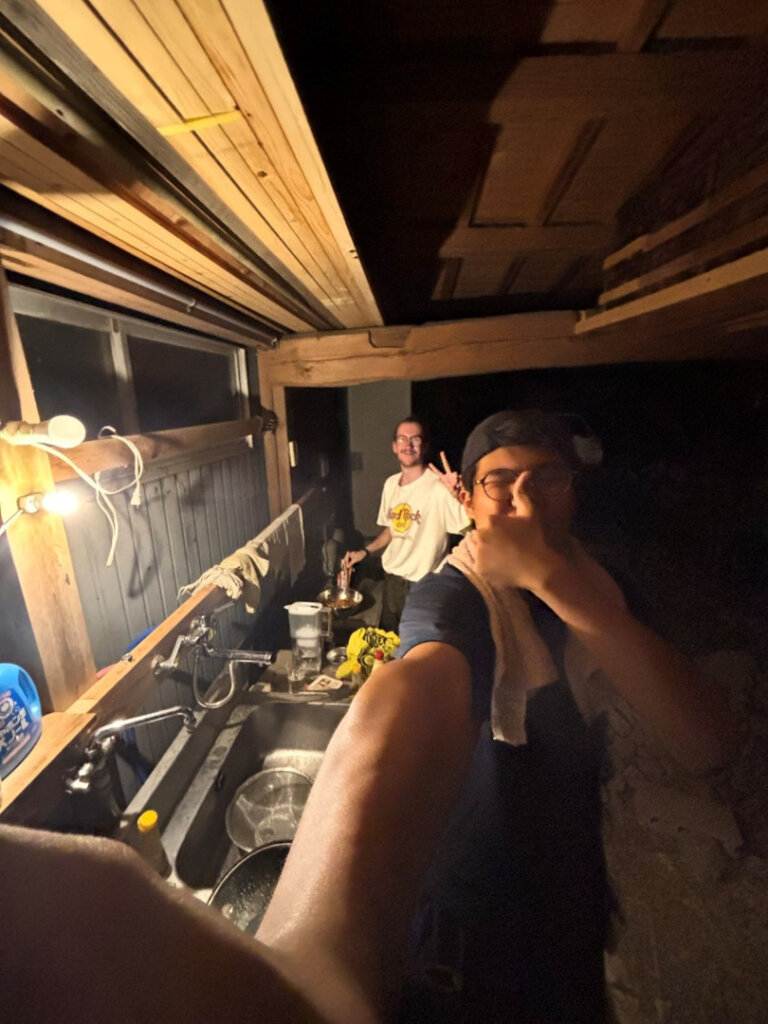
Since we were picked up at the train station in the afternoon, it was already getting late by this point, so we headed to the company office, next to which the guest room that the interns stay at is located and spent the rest of the evening having supper and getting situated in our accommodation.
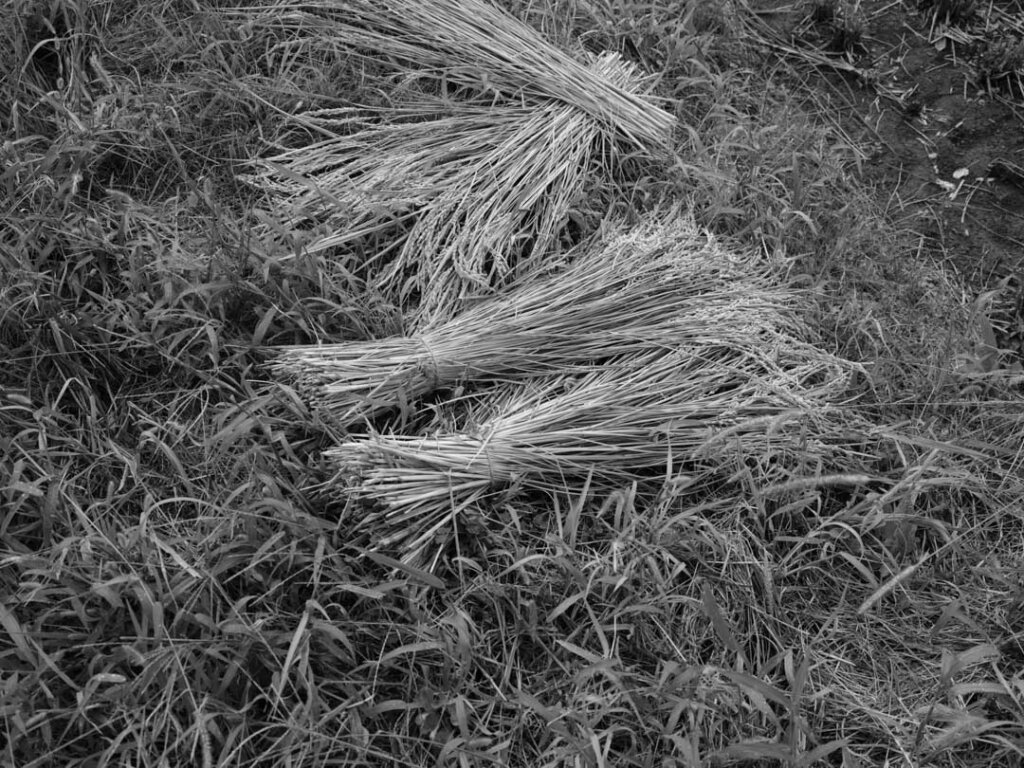
Since the timing of my internship perfectly coincided with the rice harvesting season, we spent the first four days out in the rice paddies cutting the rice plants, binding them together into bundles and hanging said bundles up to dry.
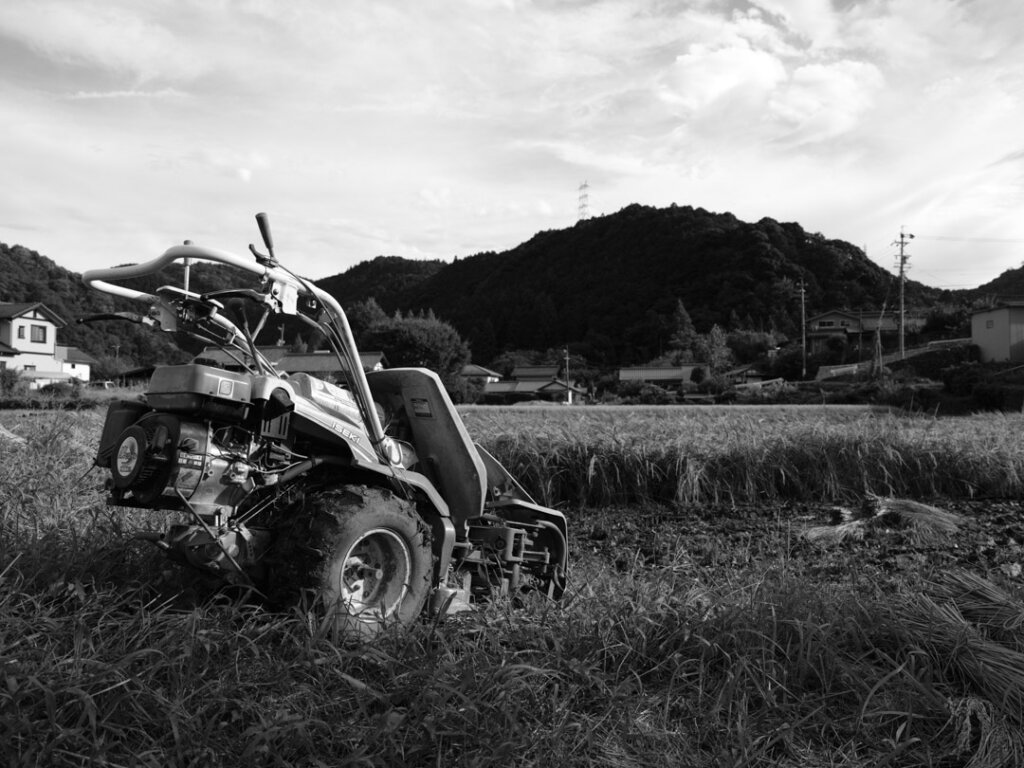
The main volume of the harvesting work was done via a machine similar to a lawn mower, that cut the individual rice plants and gathered them up into bundles, before binding them together with rope and tossing them to the side. Since the rice harvester is somewhat difficult to manoeuvre, however, any corners of the rice paddies had to be cut by hand with a sickle beforehand to make space for it to turn.
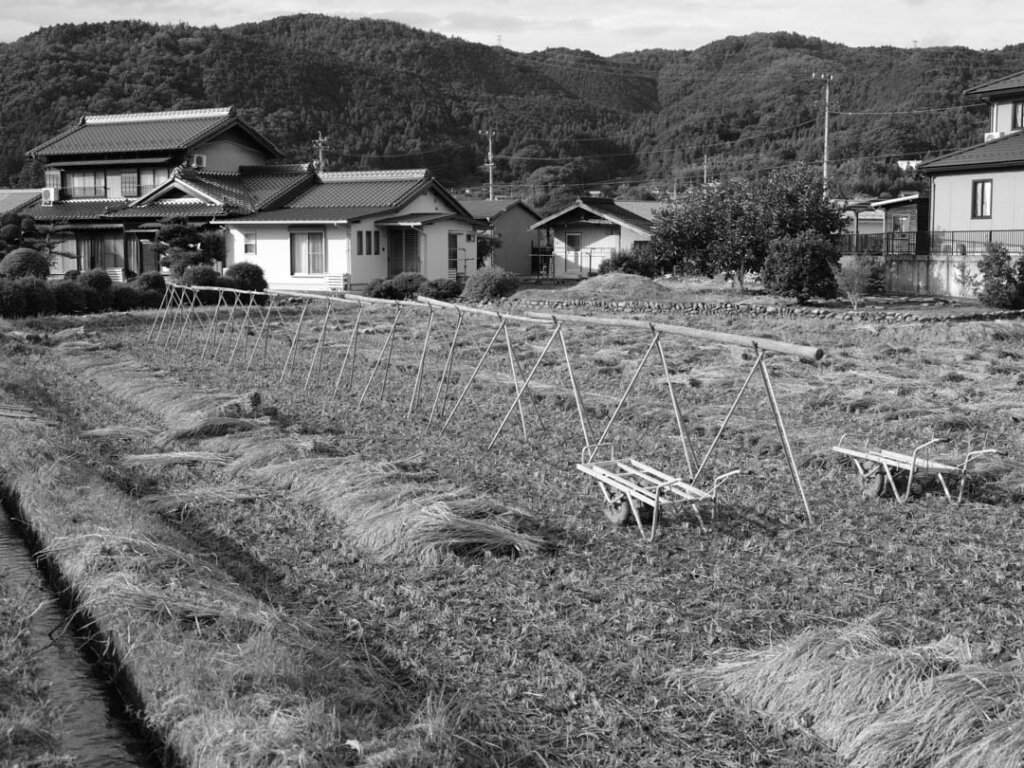
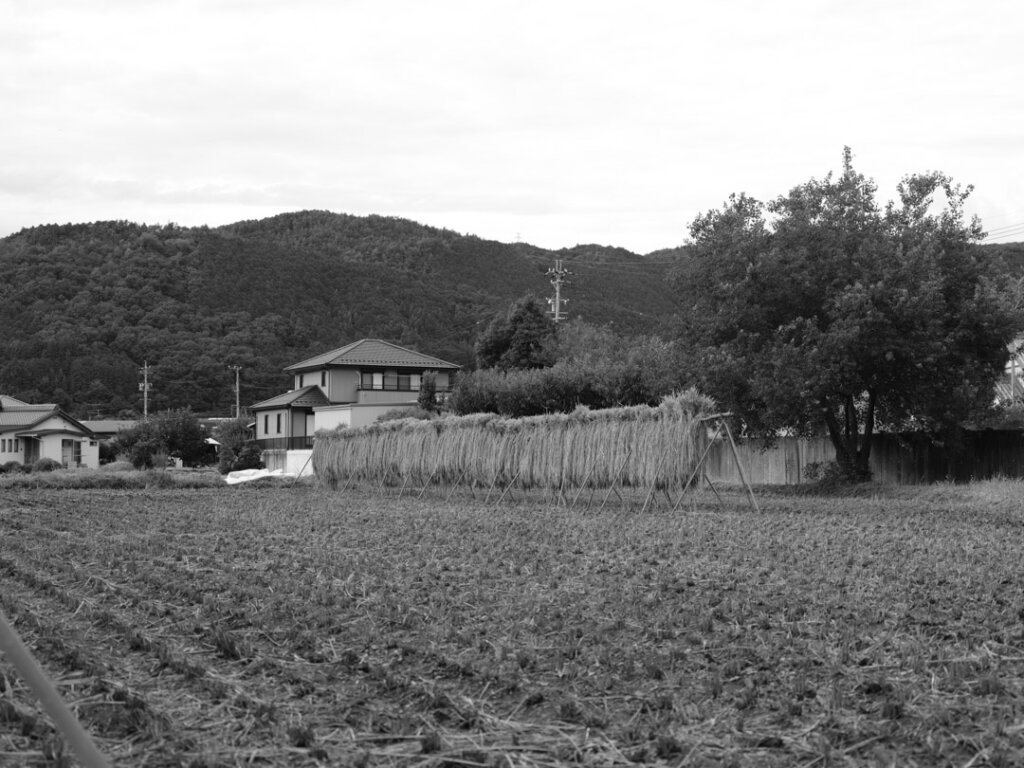
At times, the machine wouldn’t bind the rice bundles together properly, so we bound them together by hand, as well as those we had hand-harvested ourselves beforehand.
The finished bundles were then hung up on a frame of long wooden beams and steel stakes screwed together in sets of three. We were able to make decent progress throughout those four days, but were unfortunately unable to finish all six fields that Mr. Mizuno owns and cultivates.
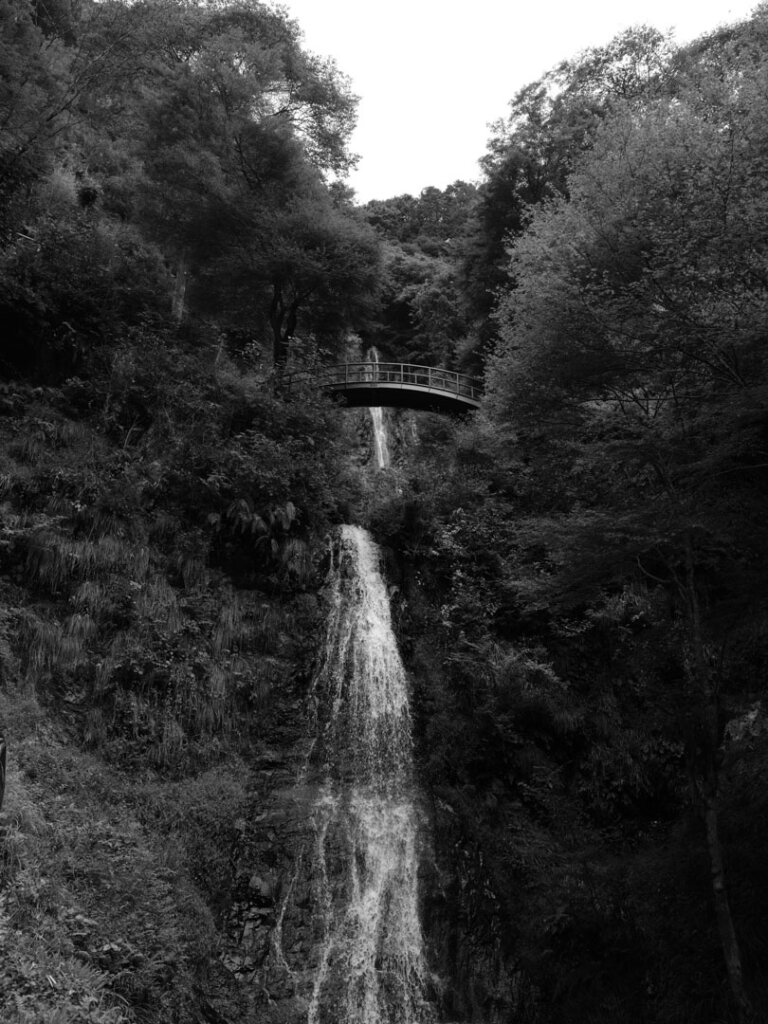
On the fifth day of our internship, we had a day off that we used to visit a popular set of five waterfalls in the region, as well as a hot spring and two delicious restaurants. It involved a lot of driving, but thankfully Mr. Mizuno was kind enough to allow us to use his Kei-Truck for the entirety of our day off.
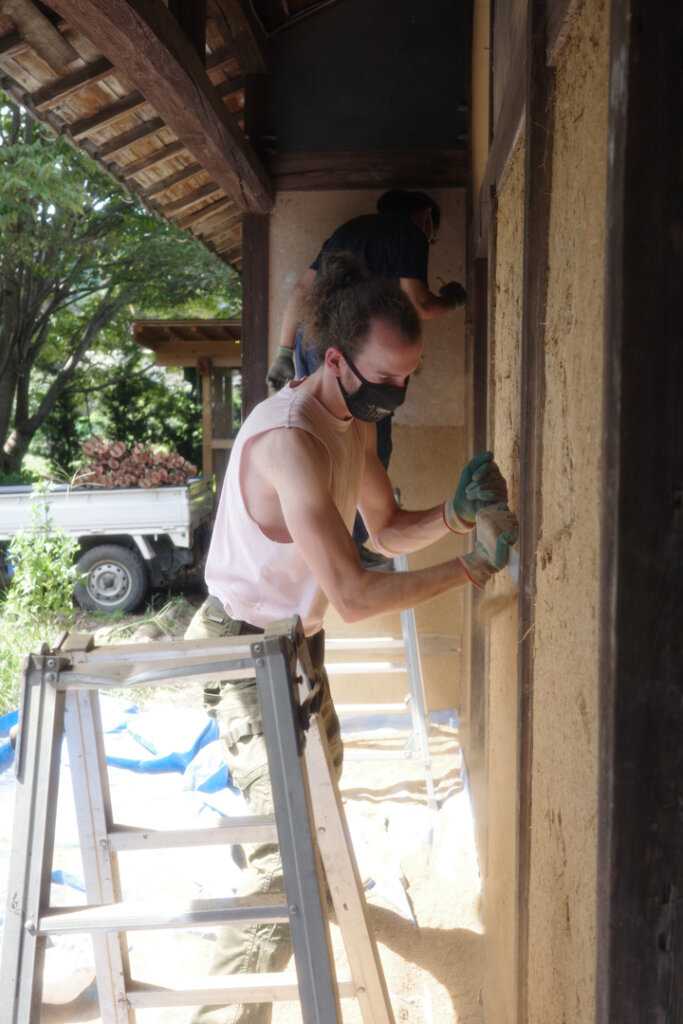
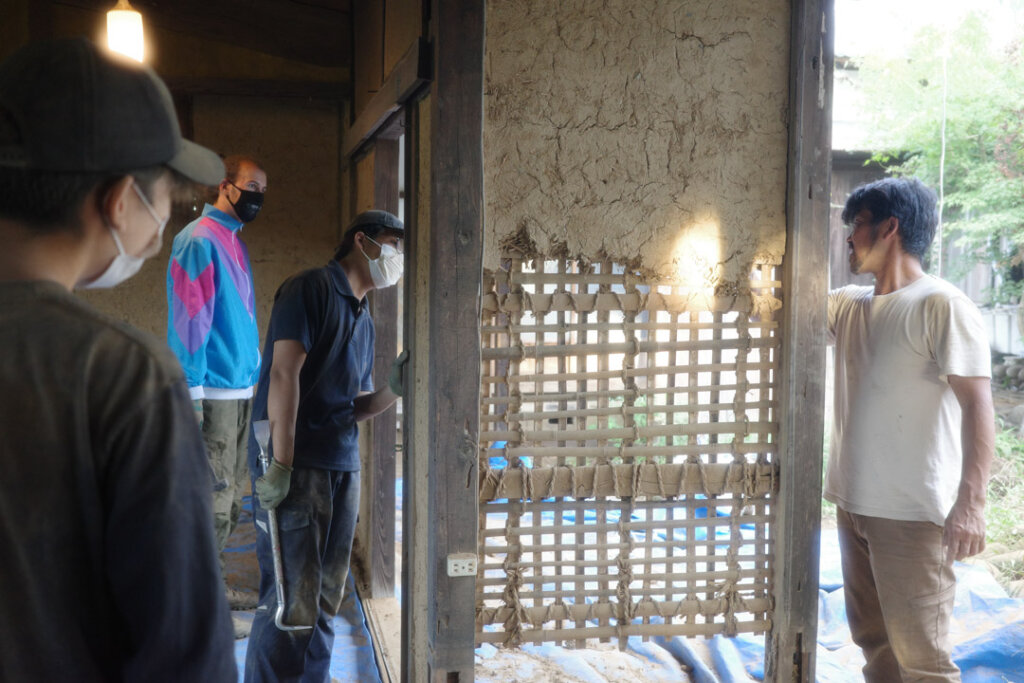
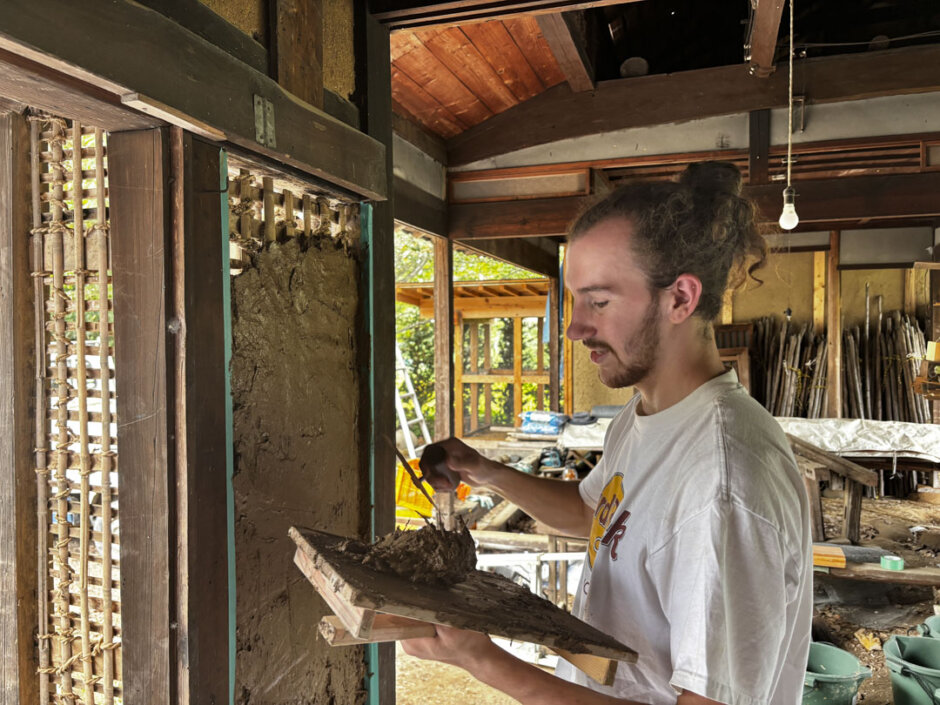
Following our day off, we continued the deconstruction of one of the buildings on the premises, dismantling the earthen wattle and daub walls of the house.
Since said building is to be renovated and only slightly altered, it was important to be very careful during the dismantling process, so as not to damage any elements that would remain as they are, such as certain pillars and beams. Since the materials constituting the walls are to be reused during the reconstruction of the building, we took great care to take down the walls in their individual layers without mixing them together.
In this way we were able to learn a lot about the makeup and construction method of traditional Japanese earthen walls.
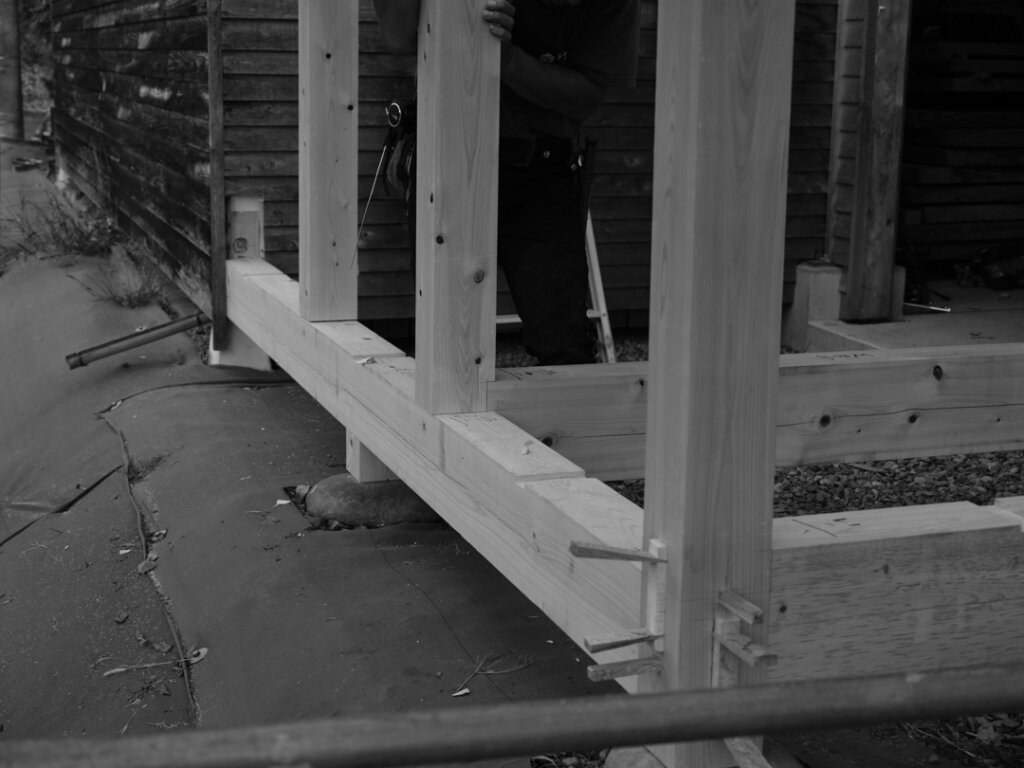
During the deconstruction work of the walls, we had the opportunity to go to a construction site and watch a Kigumi wooden framework be assembled by a group of skilled carpenters, while even being able to kindly receive some explanations as to the process. At some points we were even able to participate!
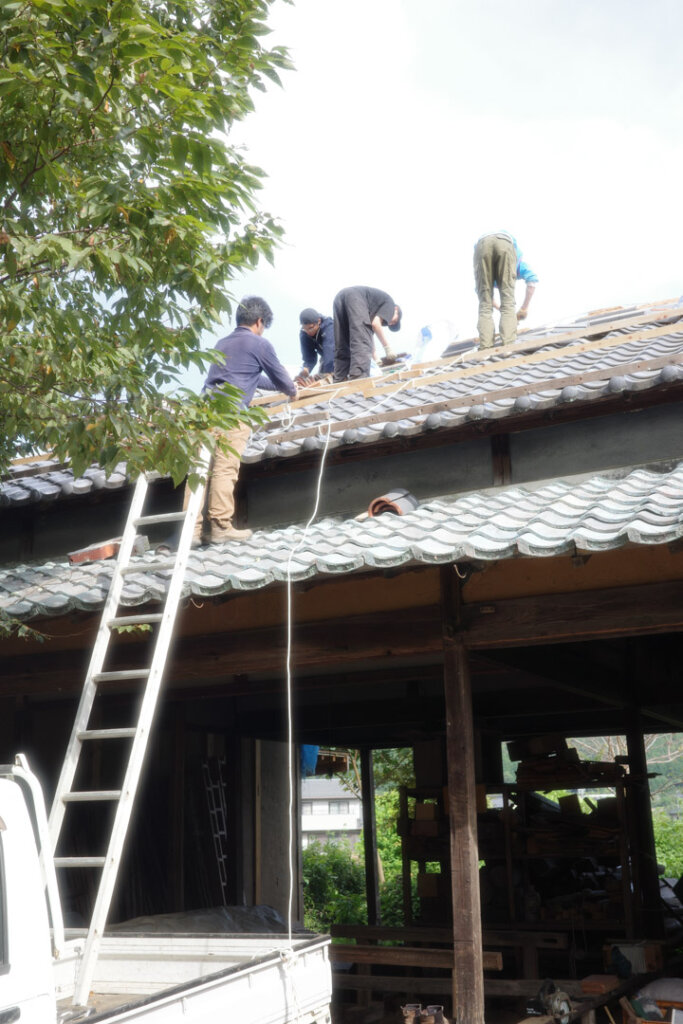
After we finished taking down the daub from the wattle, we moved on to removing the tiles from the roof of the building.
Since we were only four to five people working on the roof, it was quite tough to take down the tiles that were a bit further away from the drop-off spot, but with some perseverance we were able to make it work.
The tiles were affixed to the roof via nails, wire, daub, or hooks baked into the tiles themselves, and removing all of those external materials was quite difficult, since especially the daub used under the tiles on the ridge and along the edges was very heavy.
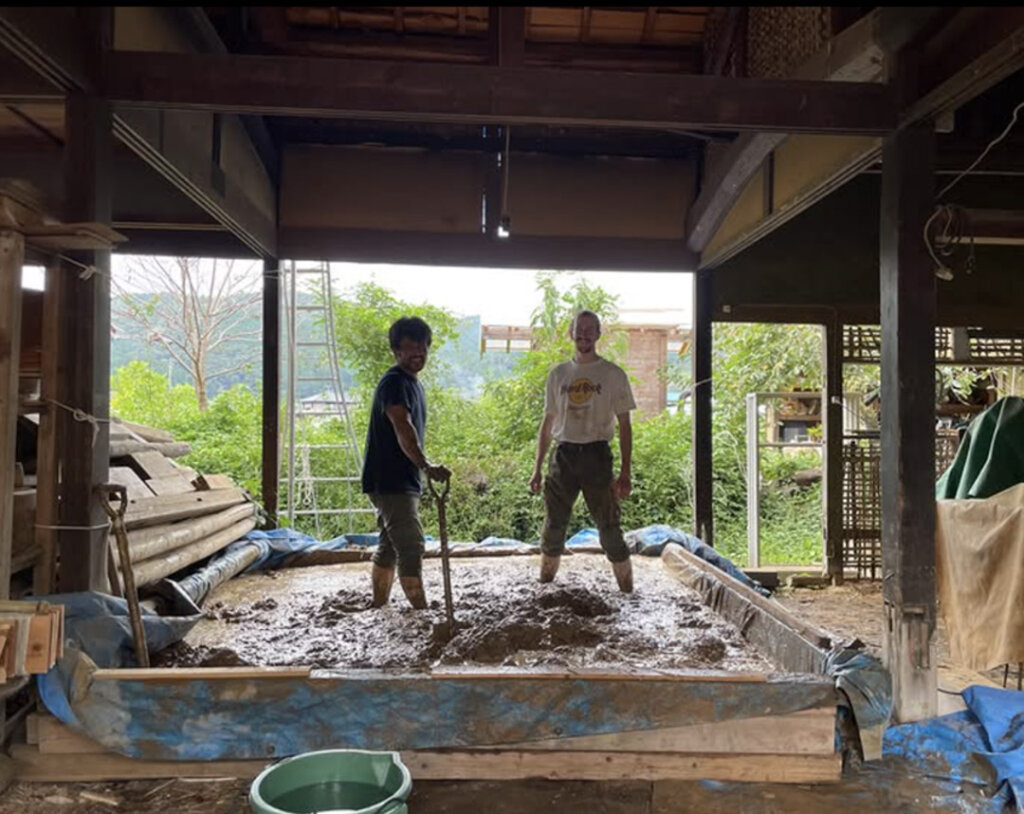
With both the old daub from the roof, as well as that from the walls, we were able to create a large quantity of new daub by rehydrating and thoroughly mixing it all together.
Being able to work with materials that are over 100 years old was a great experience, and it gave me a lot of joy to be able to revive those materials and ensure that they can remain in use for another 100 years.
For the last few days of my internship, I spent the first half of the day at the office, translating the main section of the company website, as well as an article showcasing Mizuno Architectural Bureau in a renowned Japanese architectural magazine, from Japanese into English and German, while spending the afternoons continuing to take down the tiles from the roof of the adjacent building.
During my time in the office, I was able to gain a lot of insight into how the architectural plan drawings are made, as well as receive a lot of valuable advice from Mr. Mizuno regarding my own plans and intentions for the future.
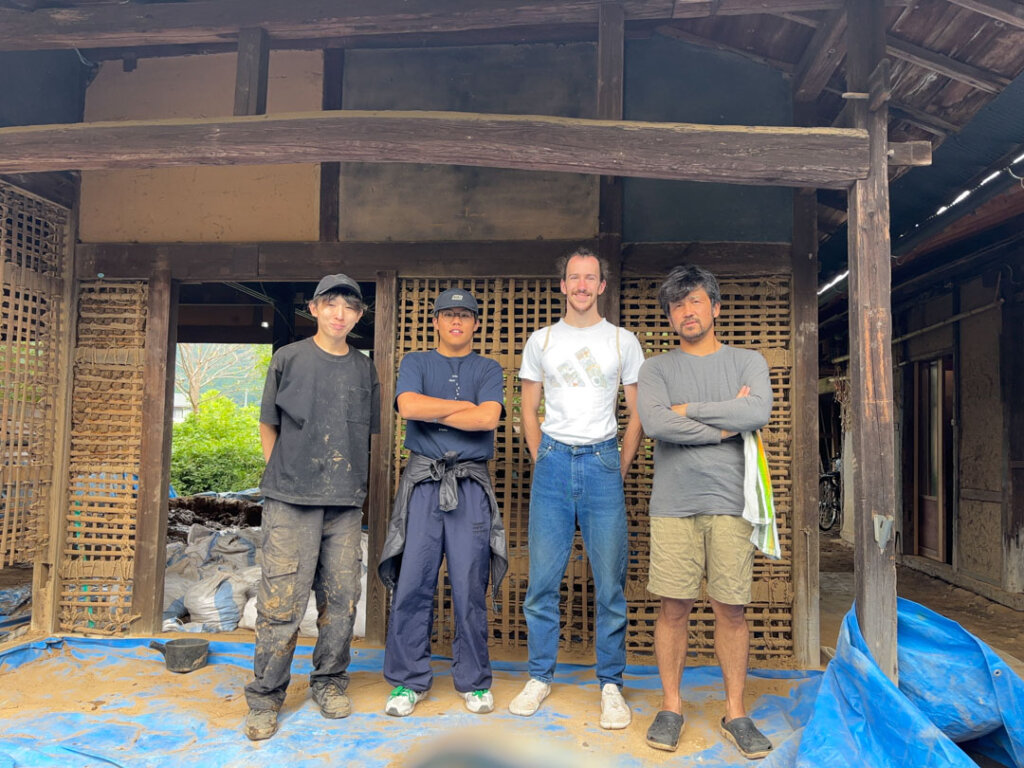
Throughout my time at the Mizuno Architectural Bureau, I was able to learn a lot about traditional Japanese architecture and gain insights and practical experience that I would have never expected or believed to have the chance to.
I am thoroughly thankful to have had this opportunity and greatly recommend anyone to do the same. Mizuno Architectural Bureau often conducts workshops at their construction sites where anyone can participate and learn about and experience traditional Japanese architecture, which are a great opportunity for those interested in this field to build their knowledge and understanding.
I look forward to being able to work together again with the Mizuno Architectural Bureau in the future.
マリウスさん、2週間ありがとうございました。
田んぼ仕事に民家の解体仕事に大変助かりました。日本語も上手でコミュニケーションには全く問題なく、他のインターンの方とも楽しく過ごしていただきました。私も海外の方とお話させていただくことで、海外のことを知れるし、なにより日本の事をあらためて知ることができる機会になりました。
私は日本語専門なので他の国の言葉はしゃべれませんが、日本語でコミュニケーションを取れる方でしたら海外の方もぜひ来ていただきたいなと思っています。
マリウスさんも、また日本に来る時はいつでも遊びに来てくださいね。
さて、こちらがマリウスさんに翻訳していただいたページです。
もちろん私は読めませんが・・・、私の書いた文なのでおおまかにはわかります。
ぜひご覧ください。
ゲストハウスは、瓦下しと土壁解体がほぼ終わりましたので、ここから大工工事に入ります。冬の間はインターンはお休みして、次回は3月頃から再開したいと思っています。
ご検討中の皆様、お待ちしています。