What is Ishibadate
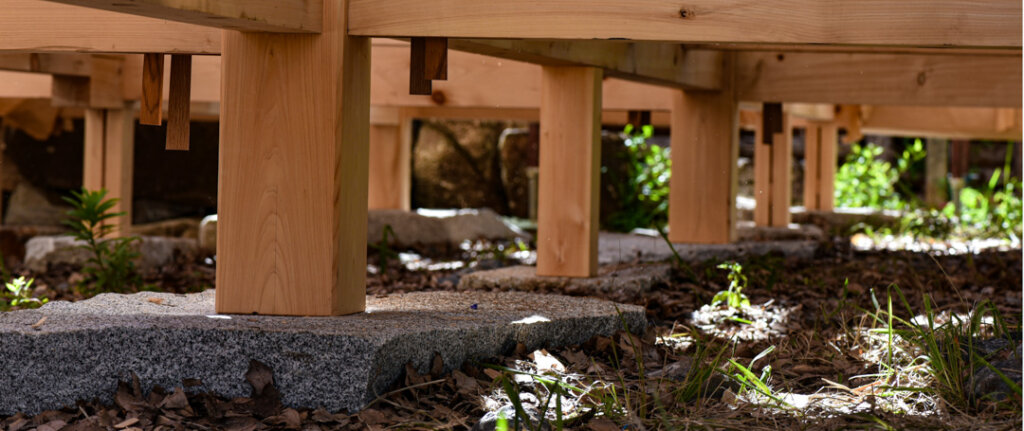
Ishibadate (石場建て) is a traditional Japanese construction method, combining local natural materials with the craftsmanship of skilled artisans. It is defined by hand-cut wooden pillars that are placed upon a foundation of half-buried stones, beams connected via traditional wooden joinery techniques, and wattle and daub walls made up of a woven bamboo lattice buried in a mixture of mud, clay, sand and straw.
The value of an Ishibadate house lies in the joys it embodies: the joy of nurturing a home and the joy of nurturing the earth.
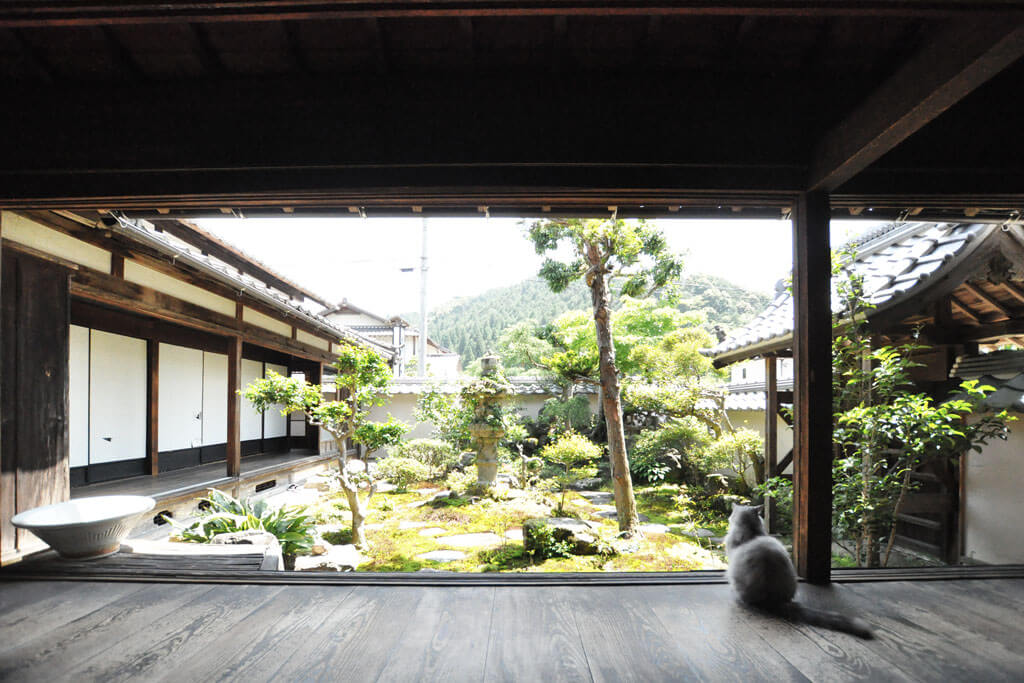
By erecting pillars upon the foundation stones and exposing the structural elements such as pillars and beams, the house is able to breathe. A house that breathes and is inhabited matures over time into a home of profound character.
Beneath the foundation stones lie large pebbles and charred wooden piles. This allows water to seep into the ground instead of sheeting, thereby returning all rainwater to the soil and allowing the earth to breathe. Breathing soil, through the power of plants and mycelium, gradually develops into richly diverse soil.
“The untreated timber and earthen walls deepen in character,
The plants, birds and insects grow ever more abundant”
An Ishibadate house, bringing the joy of nurturing, grows into a home cherished by its family and is passed down through generations.
The Six Elements of an Ishibadate House
1.Kigumi
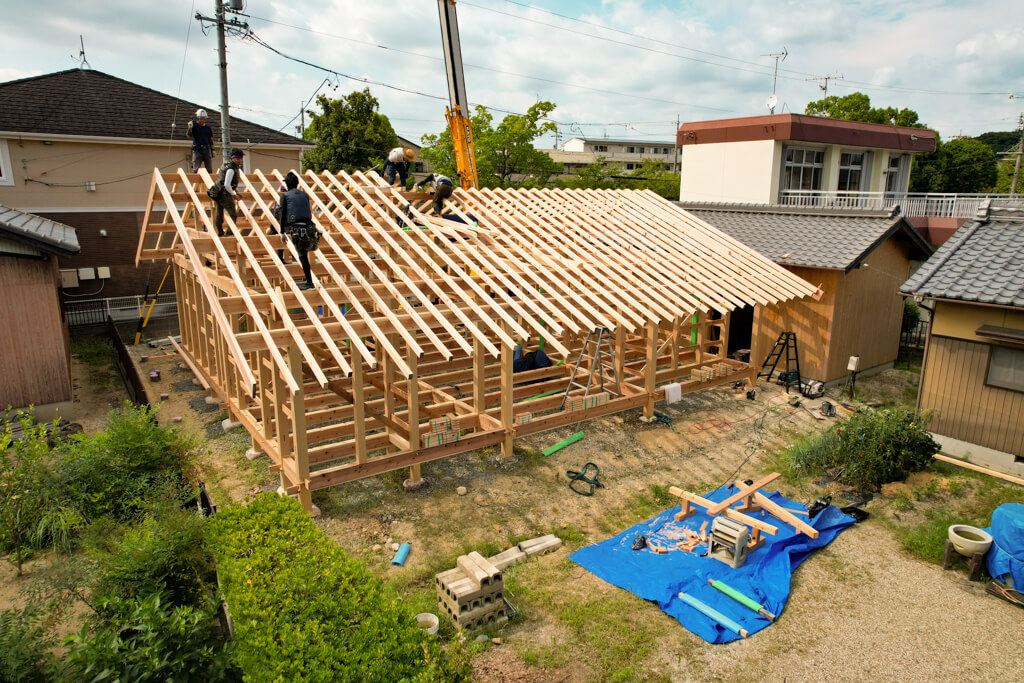
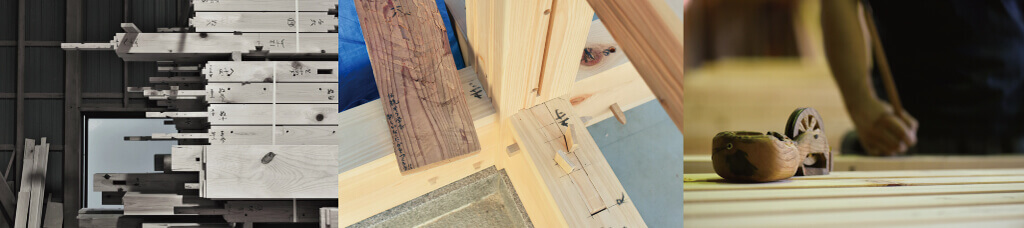
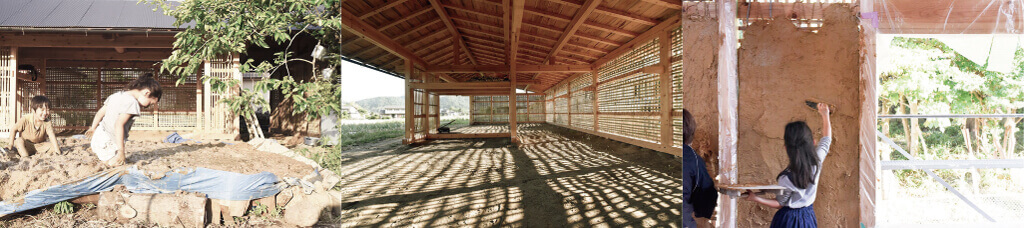
The timber used in a Kigumi framework is sourced from trees grown in nearby mountains, felled and dried naturally. Craftsmen select the wood most suitable for each part of the framework individually, hand-marking it using tools such as a Sumitsubo (墨壺) – a chalk line that makes its markings with Sumi (墨) ink – and hand-cutting it into the precise shape required for the complex wooden joints.
Kigumi houses do not rely on structural plywood, metal fittings or bolts, instead harnessing the resilient, supple, strong and beautiful properties of the wood they are made of. During earthquakes, the interlocking timber framework is able to absorb the force from the ground, shifting and moving in accordance with the shaking, thereby reducing the damage to the entire structure.
“Japan’s traditional houses,enduring for centuries.”
What is essential for houses to last is physical durability as well as timeless design. Structures incapable of withstanding decades of use, or designs that become outdated within a few years, are unnecessary.
2.Tsuchikabe
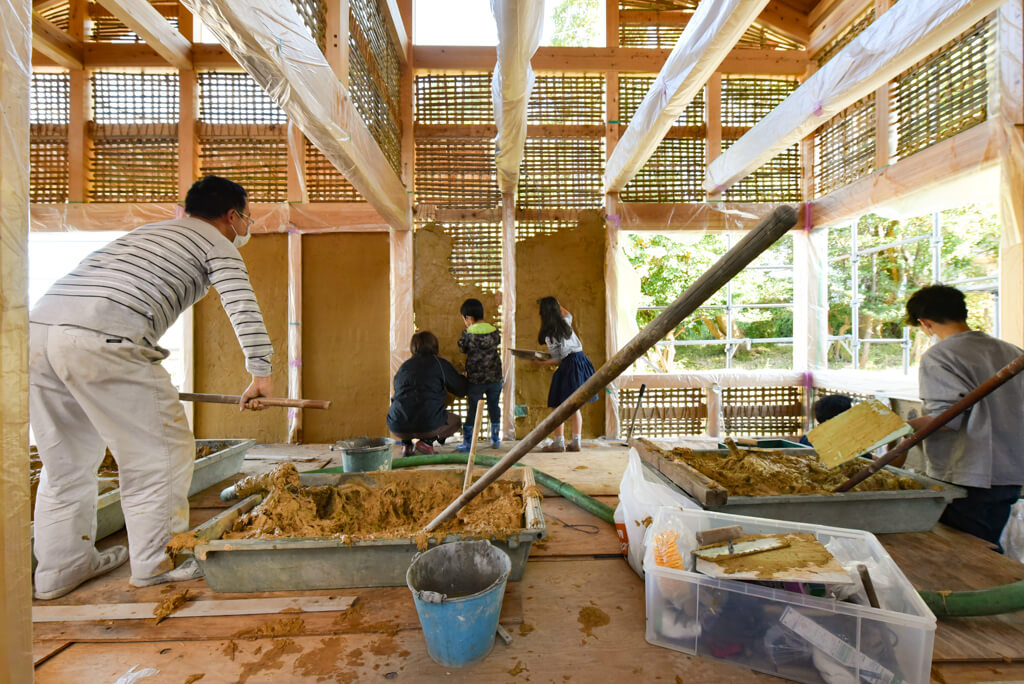
Tsuchikabe, being safe for children to touch, are a home-building method we can wholeheartedly recommend as “truly reassuring”. Made from wood, bamboo, mud, clay, sand and straw – materials that all return to the earth – these walls leave no waste for the future.
Tsuchikabe is a seismic-resistant structure, a decorative finish, and a material for heat storage and humidity regulation.
Due to its heat storage properties, Tsuchikabe retain cool air at night during summer and store the sun’s warmth and heat from a wood-burning stove during winter.
Tsuchikabe walls with moisture-regulating properties absorb humidity in summer to lower dampness, and release moisture in winter to provide humidity.
The “Tsuchikabe House” that breathes is an absolute necessity for a lifestyle attuned to natural energy.
3.Ishibadate
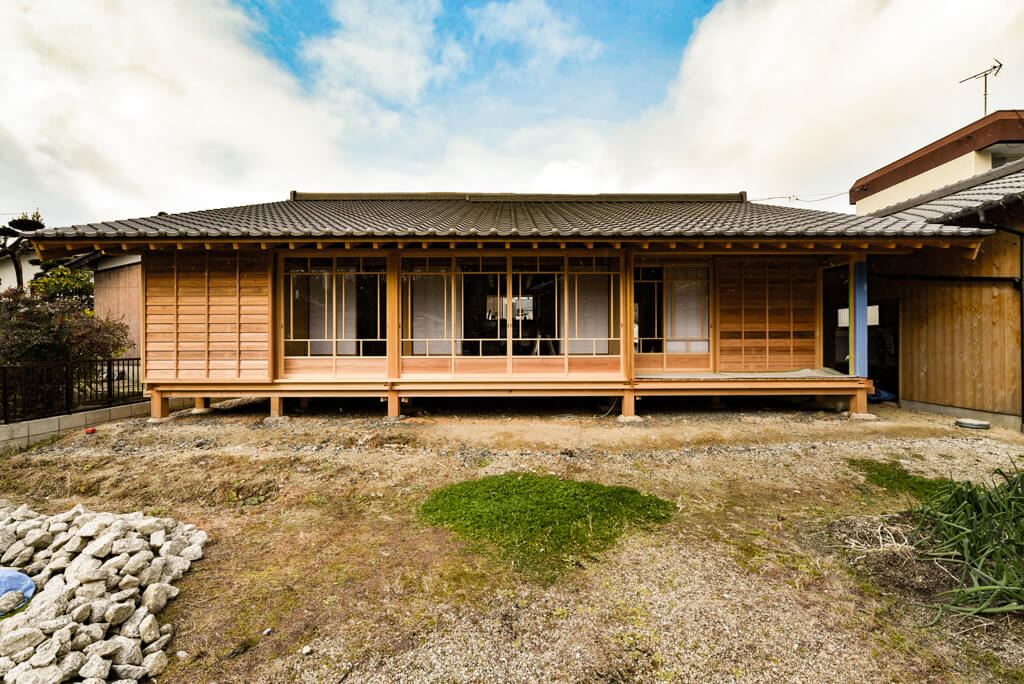
The Ishibadate seen in old folk houses and shrines involves the wooden pillars standing on the foundation stones freely, without being anchored to them.
The space beneath the floor is open, extending underneath the entire house with no concrete risers or foundation. This “floating” structure, called En no Shita (縁の下), allows air to move freely under the house, thus protecting the wooden pillars and beams from a prolonged buildup of moisture, as well as allowing the entire framework of the house to shift and move during an earthquake, making it much more resilient than a solid or rigid foundation.
The Ishibadate construction method, where the foundation stones are set atop wooden piles and large pebbles, leaves no waste for the future.
Ishibadate does not rely on foundations of steel or reinforced concrete that are unable to withstand 100 years or more.
The En no Shita allows wind and sunlight to pass beneath the floor, protecting the house from termite damage and decay.
During earthquakes, the wooden pillars shift and move atop the foundation stones to dissipate force in this enduring tradition of Japanese houses.
“The virtues of a Kigumi framework and Tsuchikabe walls are only fully realised upon an Ishibadate foundation.”
4.Shinkabe
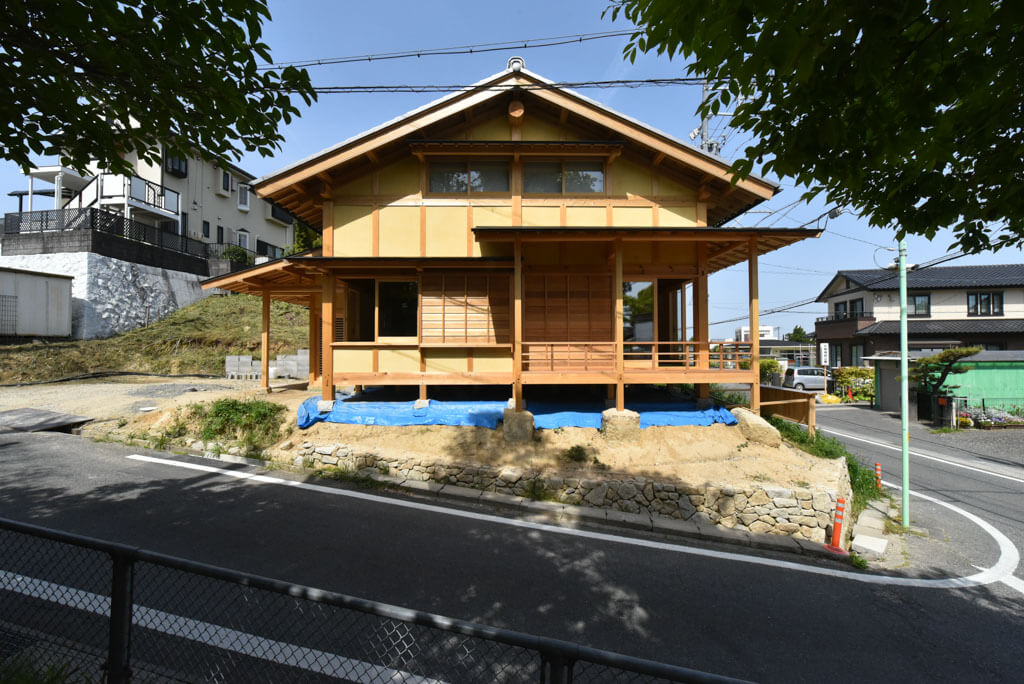
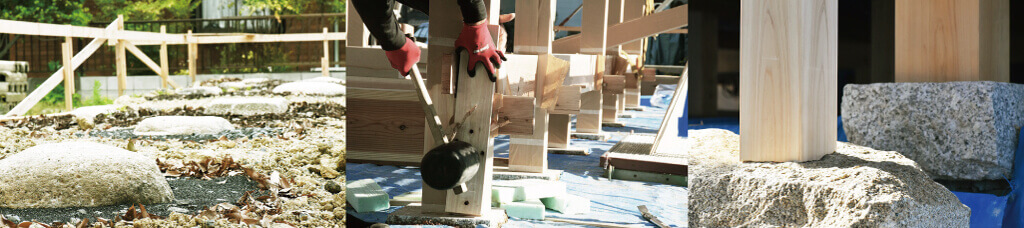
In a house with Shinkabe walls, structure and aesthetics become one. The exposed pillars and beams make the structure visible and impress upon the viewer an elegant yet robust beauty.
Living natural materials, when exposed, breathe in the wind and sunlight, thereby maturing into homes of profound character.
The Shinkabe construction method is honest and doesn’t hide any of its comprising elements. This makes it easy to spot damaged areas early and repair them before the damage has a chance to spread or take root.
Houses crafted by the hands of artisans can be repaired by future artisans throughout the ages and are passed down through generations.
In Japan, a country prone to natural disasters, the key to ensuring homes last for generations is building them so they can be repaired when they are damaged.
Homes lasting for generations slows the building cycle, reducing the rate of demolitions and in turn reducing construction waste as a whole.
Both Ishibadate foundations and Kigumi frameworks, along with Tsuchikabe wattle and daub, are a means to create enduring Shinkabe walls.
5.Dochū Kankyō
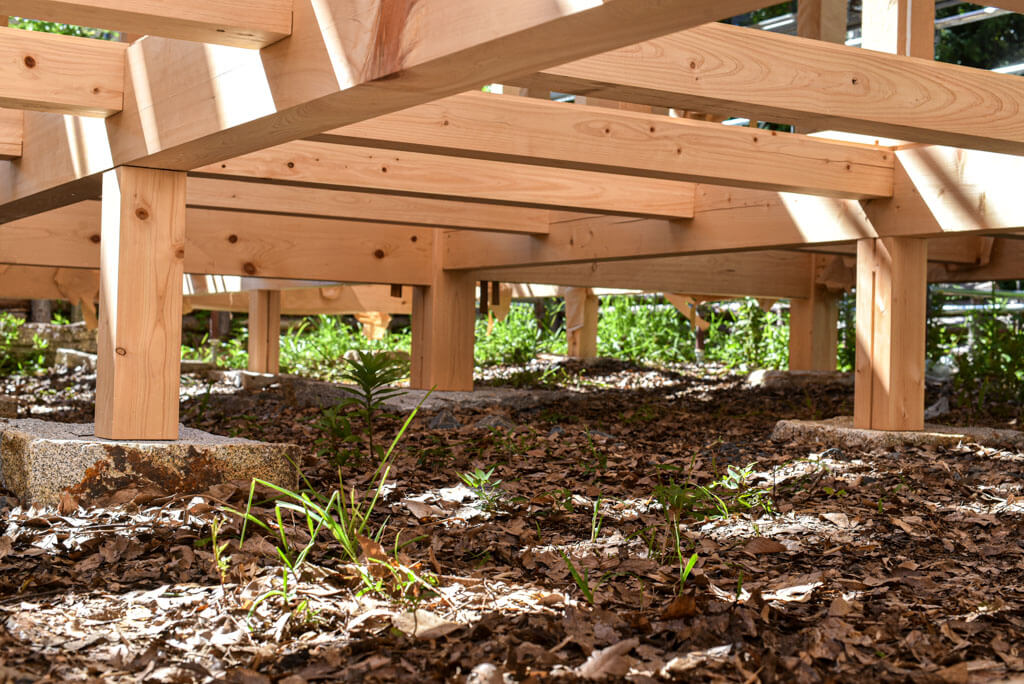
Similarly to the architecture of Ishibadate, the civil – or rather, natural – engineering of Ishibadate begins with the excavation of the local soil, after which charred wooden piles are driven into the excavated areas and buried in large pebbles. The foundation stones of the house are then set onto the charred wooden piles and into the pebbles.
The purpose of the charred piles as well as the large pebbles is to ensure soil aeration and permeability by creating gaps and spaces, while the ground surface is covered with branches, leaves, and vegetation.
In comparison to a concrete foundation, the connection between the surface and the soil below is not severed. Instead, air is returned to the earth, and rainwater is allowed to seep back into the ground.
By nurturing a healthy Dochū Kankyō (土中環境, the natural environment and ecosystem of the earth), plant roots and fungal mycelium form symbiotic relationships, enabling the soil to breathe, just as a house does.
Upon soil that breathes, a “seedling garden” with naturally germinating acorns takes shape.
In this “seedling garden” where plants take root and insects and birds dwell, nature flourishes through the power of living creatures.
Recovery, rehabilitation and revival of the natural environment can be achieved through the natural engineering of Ishibadate.
6.Satochi-Satoyama
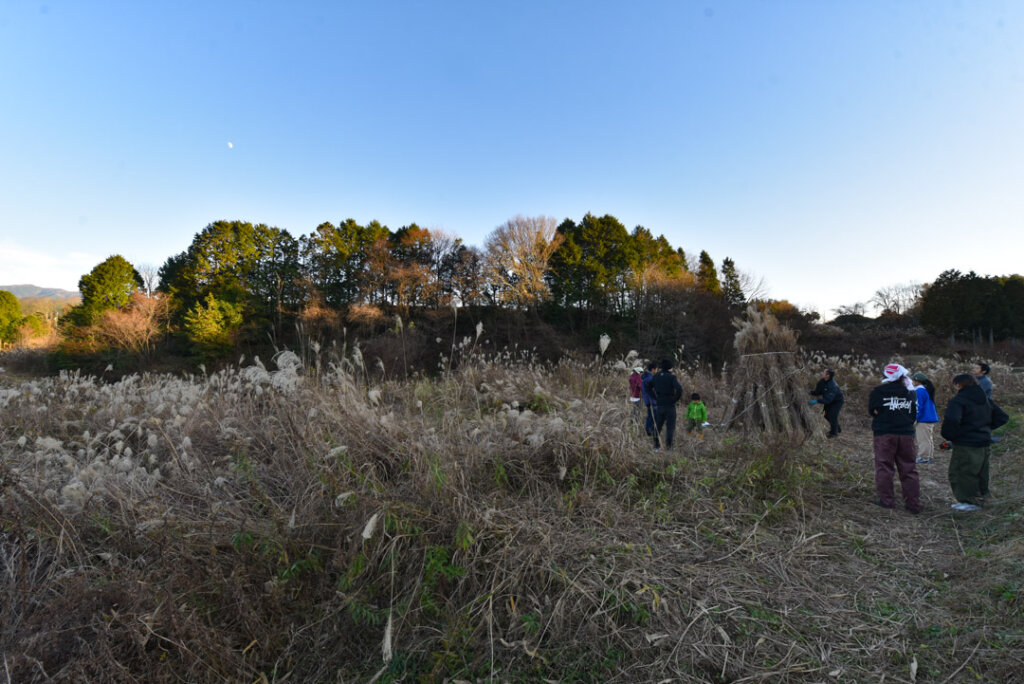
The primary materials used for the construction of Ishibadate houses are natural byproducts born from everyday life.
To access the mountains, paths are cleared and trees thinned. Timber felled for that purpose is used to build pillars, beams, boards, furniture, wooden stakes, brushwood, and firewood.
To cultivate rice, paddy fields are maintained and farmed. Rice straw is used in plastering, tatami mats, and straw rope, as well as for earthen walls in conjunction with clay.
Bamboo groves and thatch fields are preserved and protected, with the materials harvested from them being used for latticework and roof thatching, as well as for daily household items.
Places where these practices come together are called Satoyama.
Satoyama landscapes have fostered diverse natural environments and enriched biodiversity through human habitation.
Ishibadate houses represent one means by which humans live in accordance with nature, alongside birds, insects, and plants.